
Commercial Cargo
Shipping Commercial Cargo to Greece
Shipping commercial cargo to Greece requires a disciplined and highly coordinated approach that extends well beyond standard freight forwarding. Unlike household shipments, commercial cargo introduces layers of regulatory oversight, classification requirements, and liability considerations that must be addressed before transport is ever arranged. Whether the shipment involves building materials, pharmaceuticals, exhibition equipment, construction machinery, or specialized equipment, the process demands accuracy, compliance, and proper handling at every stage.
Greece operates within the broader framework of European Union import regulations, meaning that cargo entering the country must meet not only local requirements but also applicable EU standards. Customs authorities in Greece, particularly at major ports such as Piraeus, enforce documentation and classification rules with a level of scrutiny that requires careful preparation in advance.
At Hermes International Movers, commercial cargo shipments are managed with a focus on logistical precision and regulatory awareness. While we do not act as licensing authorities, we provide clients with guidance and direction to the appropriate parties for export licensing, as well as practical support in navigating Greek import requirements. Each shipment is coordinated individually, ensuring that it is structured correctly based on the type of cargo, method of transport, and intended use upon arrival.
We support a wide range of cargo categories, including building materials, shelf-stable pharmaceuticals and over-the-counter products, military-related equipment (subject to applicable regulations), exhibition and trade show materials, and heavy construction equipment. Each category presents its own requirements, and those differences must be accounted for from the outset.
Shipping Methods and Cargo Handling
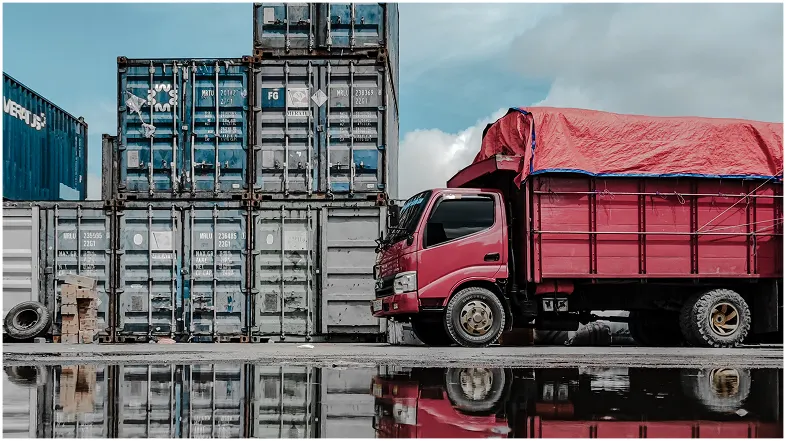
Commercial cargo to Greece can be transported using a variety of methods, each selected based on the nature of the goods, urgency, and logistical requirements. Ocean freight remains the most common method, particularly for large or heavy shipments, with cargo transported via full container load (FCL), less-than-container load (LCL), or breakbulk configurations for oversized equipment.
For machinery and construction equipment, Roll-on/Roll-off (Ro/Ro) transport may also be used where appropriate, allowing vehicles and wheeled equipment to be driven directly onto specialized vessels. Air freight is available for time-sensitive shipments, particularly for pharmaceuticals and exhibition materials, though this method is typically reserved for cargo where timing outweighs cost considerations.
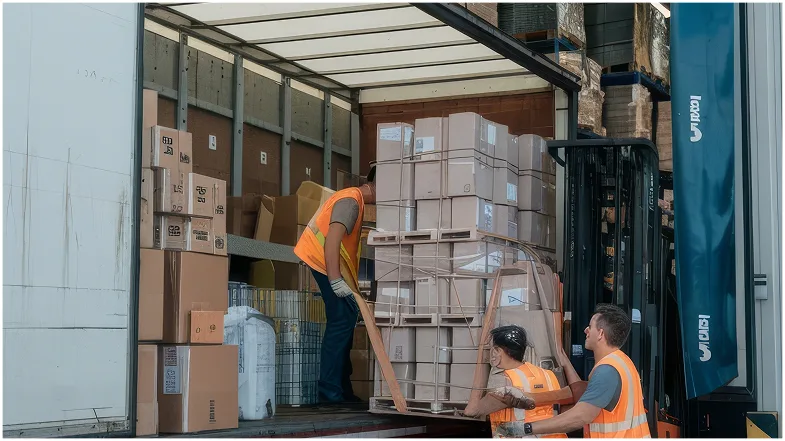
A critical component of commercial shipping is proper preparation and packaging. At Hermes, all commercial cargo is handled using custom-built crating solutions, designed specifically for the dimensions, weight, and fragility of the item being shipped. There is no standardized approach—each crate is engineered to protect the cargo throughout ocean transit, port handling, and final delivery.
It is important to note that Hermes does not handle hazardous materials (hazmat). Any cargo requiring hazardous classification or specialized handling falls outside the scope of our services and must be addressed through appropriately licensed providers.
Important Industry Risks and Compliance Considerations
Commercial shipping carries inherent risks, many of which stem not from transportation itself but from improper handling, misrepresentation, or attempts to reduce costs through non-compliant practices.
One of the most common issues in the industry involves misdeclared cargo, where goods are inaccurately described or undervalued in an effort to reduce duties or bypass regulatory requirements. While this may appear advantageous in the short term, it exposes the shipment to significant risk, including customs seizure, financial penalties, and extended delays.
Similarly, improper classification of regulated goods—particularly in categories such as pharmaceuticals or military-related equipment—can trigger compliance issues that halt a shipment entirely. These categories often require coordination with licensing authorities, and failure to address those requirements in advance can result in costly disruptions.
Clients should also be cautious of providers offering unusually low pricing for complex commercial shipments. In many cases, such pricing is achieved by cutting corners in documentation, packaging, or compliance—practices that ultimately shift risk onto the client.
Accuracy, transparency, and adherence to proper procedures are not optional in commercial shipping—they are essential.
Legal Guidelines
The importation of commercial cargo into Greece is governed by both national and European Union regulations, which establish requirements for classification, valuation, and compliance based on the nature of the goods being shipped. Each category of cargo—whether building materials, pharmaceuticals, or equipment—falls under a specific regulatory framework that determines how it must be documented and cleared.
For example, pharmaceuticals and medical-related products, even when shelf-stable, may be subject to oversight regarding their classification and intended use. Military-related equipment introduces an additional layer of complexity, often requiring export licensing from the country of origin and strict adherence to import regulations on the receiving end. Construction equipment and machinery must be properly documented with respect to ownership, specifications, and condition, particularly if they are to be used commercially within Greece.
Hermes International Movers does not issue export licenses or act as a licensing authority. However, we provide guidance to clients and direct them to the appropriate regulatory bodies and partners required to complete these processes. On the import side, we assist clients in understanding Greek requirements and preparing documentation accordingly, ensuring that shipments are aligned with the applicable legal framework.
Because regulatory requirements vary based on cargo type and intended use, each shipment must be evaluated individually before transport is arranged.
Export Documentation
Exporting commercial cargo from the United States requires a structured documentation process that establishes the nature, value, and ownership of the goods, as well as compliance with applicable export regulations. This typically includes commercial invoices, packing lists, and shipping documentation such as the bill of lading, along with any required filings through U.S. export systems.
For certain categories of cargo—particularly those involving controlled or regulated items—export licensing may be required. While Hermes does not facilitate licensing directly, we guide clients to the appropriate channels to ensure that all regulatory requirements are satisfied prior to shipment.
On the import side, Greek customs authorities require documentation that aligns precisely with export records. Any discrepancies between declared values, descriptions, or quantities can result in delays, inspections, or additional costs. This is particularly important for commercial cargo, where classification codes and valuation play a central role in determining duties and compliance requirements.
Consistency and accuracy across all documentation are critical to ensuring a smooth clearance process.
Insurance and Liability Considerations
Commercial cargo introduces a level of financial exposure that makes insurance not only advisable but, in many cases, essential.
Insurance is available upon request and is strongly recommended for all commercial shipments. For high-value cargo, insurance may be required as a condition of transport, depending on the nature of the goods and the carrier involved.
Without proper coverage, clients assume the risk of loss or damage during transit, handling, or storage. Given the complexity and value of many commercial shipments, this risk should be evaluated carefully before proceeding.
Useful Information
Shipping commercial cargo to Greece involves more than transportation—it is a coordinated process that includes preparation, compliance, transit, and final clearance. Transit times vary depending on the method of transport, with ocean freight typically requiring several weeks, while air freight offers shorter timelines at a higher cost.
Costs associated with shipping are separate from import-related expenses such as duties, taxes, and port fees, all of which must be considered when planning a shipment. Additionally, the classification and intended use of the cargo can influence both regulatory requirements and overall cost structure.
Most importantly, every commercial shipment is unique. The approach taken for building materials will differ from that for pharmaceuticals or exhibition equipment, and each requires its own level of preparation and compliance review.
Final Note: Shipping commercial cargo to Greece requires a level of precision and coordination that leaves little room for error. Regulatory requirements, documentation standards, and handling procedures must all align to ensure that the shipment moves efficiently from origin to destination.
Hermes International Movers provides the logistical expertise and coordination necessary to support this process, while guiding clients through the regulatory landscape and connecting them with the appropriate partners for compliance-related requirements.
For shipment-specific guidance, documentation review, and planning support, we strongly recommend contacting our team directly. Each shipment will be evaluated individually to ensure that it is structured correctly, handled properly, and aligned with all applicable requirements from departure through arrival.